Eight to twelve weeks of grass pollen, region by region. Plus the one variable that breaks every regional forecast.
It's May, which means grass is taking over from trees.
If morning sneezing has shifted in the last week or two, that's why. Tree pollen tapers through April. Then grass — Bermuda, Timothy, Rye, Orchard, Kentucky bluegrass — picks up exactly where trees leave off, and runs for the next 8 to 12 weeks.
It plays by different rules. The season is much longer than any single tree species (3 to 6 weeks each, vs. 8 to 12 for grass). The pollen is heavier and settles closer to ground level, so kids playing on grass fields get hit harder than the regional forecast suggests. And there's one wild variable almost no allergy guide mentions: a lawnmower running within a few blocks can spike local airborne grass allergen 8x for the next few hours.
That last one took me a year to figure out.
This is the calendar I wish I'd had when grass season first showed up on the block. It pulls from a year of pollen data and the AAFA 2026 and Climate Central 2026 reports. For today's pollen count for your city, pair it with live data. The patterns below tell you when to brace.
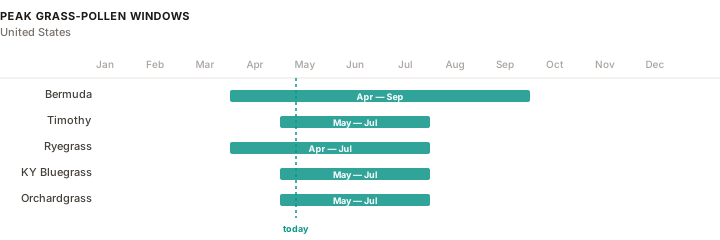
The 5 grasses, in plain English
There are nine allergenic grasses on AAFA's official list. In practice, five do almost all the damage, and which five matter to you depends mostly on where you live.
Timothy — the Northern half
North of Pennsylvania, the main culprit is Timothy. It's the classic, most-studied grass allergen, used in nearly every grass immunotherapy panel, and the one most likely to flare when allergy parents start asking questions in mid-May. USDA zones 3 to 8. Worst around Minneapolis pollen count, Chicago, Boston, New York, Cleveland, and the Great Lakes generally.
Bermuda — the Southern story
Bermuda is the dominant lawn turf across USDA zones 7b through 10b. It's the green stuff covering most of Atlanta, Houston, the entire Florida peninsula, and southern California. In zones 9 and 10 it can release pollen on warm winter days, which is why Miami and San Diego allergies don't really have an off-season. Worst in Atlanta pollen count, Houston pollen count, Dallas, Phoenix, Tampa, and Wesley Chapel, FL.
Kentucky bluegrass — the middle of the country
Kentucky bluegrass actually came from Asia, not Kentucky. It is, however, the most common cool-season lawn grass in the U.S., and it peaks slightly earlier than Timothy. If you live in Columbus pollen count, Indianapolis, Louisville pollen count, Denver, or Kansas City, and your symptoms kick in mid-May before Timothy is really going, this is probably the one.
Ryegrass — Pacific Northwest and West Coast
Mild, wet winters keep ryegrass green year-round in the Pacific Northwest, which is also why it gets overseeded onto Southern lawns for winter color. The heaviest pollen loads turn up in irrigated valleys around Seattle pollen count, Portland, Spokane, Sacramento, and the Palouse country around Pullman, WA. Across the Atlantic: London and Manchester get hit hard too.
Orchardgrass — the I-95 corridor
Orchardgrass is the heaviest single-stem pollen producer of any common grass, and it has the strongest food cross-reactivity of the bunch. The summertime “sudden food sensitivity” to melon, tomato, or kiwi is often this. Found in meadows, hayfields, and roadsides across the Northeast and Mid-Atlantic. The I-95 corridor through Maryland — Hagerstown, College Park, Waldorf, Bladensburg — gets it bad. Plus Philadelphia pollen count, Baltimore, Raleigh, and Nashville pollen count.
Honorable mentions: Bahia (Florida and Gulf Coast, late summer peak), Johnson grass (invasive, roadsides and farm edges), and Sweet vernal — the one that smells like fresh hay when cut. Minor but punchy.
The mowing-day trap
Daily forecasts use regional averages. They're smoothed over a 50-mile radius, sometimes wider. They have no idea if the apartment complex two doors down is getting a Saturday-morning trim. And honestly, that local micro-spike is what's behind most of the “but the forecast said low!” confusion in allergy forums.
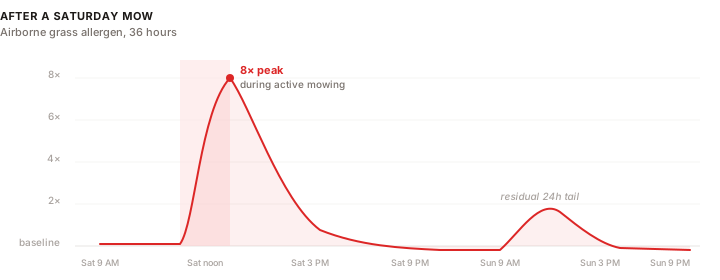
A 2007 JACI study put a number on it: airborne grass-allergen levels went up 8x during active mowing, then dropped quickly once the cutting stopped. The cut grass keeps releasing residual pollen for 24 to 48 hours after, which is why the day after a big neighborhood mowing day is often worse than the day of.
So three rules of thumb during May–July weekends:
- Saturday and Sunday afternoons are worst-case — most residential mowing happens then.
- Close windows before the mower starts, not after. Once the spike is in your house, it settles into carpets and upholstery for hours.
- Watch the 24-hour tail — schedule outdoor activity before a known mowing day, not after.
When grass peaks where you live
Grass season doesn't arrive everywhere at once. Here's the rough month-by-month rollout, with 2026-specific notes from AccuWeather and Pollen.com's seasonal outlook woven in.
South starts, North still on tree pollen
Bermuda begins pollination across the Deep South. Ryegrass peaks in coastal California and the Pacific Northwest. North of Tennessee, you're still in tree season. 2026 note: Texas may see a brief above-average spike. Heads up if you usually don't react until June.
Watch: Houston, Atlanta pollen count, Los Angeles, Seattle
National peak begins
Cool-season grasses kick off across the entire northern half. Bermuda hits its first major peak in the South. 2026 note: Chicago, St. Louis, and Minneapolis are forecast above-average for grass after a wet, warm spring.
Watch: Atlanta, Louisville pollen count, Philadelphia, Dallas pollen count, Raleigh
Peak chaos east of the Rockies
Timothy hits full peak in the Northeast and Upper Midwest. Bermuda is everywhere south of zone 7. 2026 note: AccuWeather projects a surge across the Northern Plains and Great Lakes. Boston, Chicago, and Minneapolis may run above the 5-year average.
Watch: Minneapolis pollen count, Boston pollen count, Houston, Raleigh
Cool-season fades, warm-season holds
Northern grasses wind down by mid-month. Bermuda and Bahia keep producing across the South. The Pacific Northwest finally gets a breather. For the northern U.S., this is window-reopen season.
Watch: Houston, Miami, Tampa, Phoenix pollen count
Bahia and the ragweed handoff
Bahia enters its main peak across Florida and the Gulf Coast. 2026 note: the Gulf Coast may catch a small break. AccuWeather calls for below-average grass pollen due to a drier start to summer. Most of the rest of the country is calmer for grass, but ragweed begins around mid-month.
Watch: Jacksonville, Miami pollen count, New Orleans
Mostly off, except the Deep South
Grass drops to background levels across most of the country. The exception is zones 9 and 10 (south Florida, south Texas, southern California, Phoenix), where Bermuda releases on warm winter days. Move from Minneapolis to Tampa and your “grass season” effectively becomes year-round.
The environmental playbook
Knowing when grass season hits is half the battle. The other half is reducing exposure when counts are high. Five things that actually move the needle:
- Watch your specific city's forecast, not the regional average. PollenTracker covers 800+ U.S. and U.K. cities with a YES, CAUTION, or NO outdoor decision for the day. Bookmark your city.
- HEPA filter in the bedroom is non-negotiable during peak weeks. Whole grass-pollen grains are 20 to 35 microns; true HEPA catches 99.97% of anything 0.3 microns or larger. Run it on high.
- Shower and change after outdoor time. Especially hair. The 5-minute rinse before bed is the cheapest fix nobody actually does.
- Windows: closed 9 to 6. Open before 7 AM or after 9 PM. The release window is the middle of the day; opening windows then invites it straight in.
- Move outdoor activity to morning. 7 AM is the sweet spot in May through July. Soccer practice, dog walks, runs.
If symptoms persist despite environmental controls or interfere with daily life, talk to a clinician. PollenTracker is a forecasting tool, not a treatment guide.
Your local grass forecast
The calendar tells you when. Daily decisions need today's pollen count for your specific city. Click your region for the full city list. Each link goes to a page with current grass-pollen level, AQI, weather, and the next 24-hour forecast.
Northeast & Mid-Atlantic+
New York · Boston · Philadelphia · Washington, DC · Baltimore · Pittsburgh · Buffalo · Rochester · Hartford · Watertown, MA · Falls Church · College Park · Hagerstown · Waldorf · Bladensburg · Bryans Road · Cloverly · Torrington · East Providence · Miller Place · Rutland · Hampstead
Southeast+
Atlanta · Raleigh · Charlotte · Nashville · Jacksonville · Tampa · Miami · Orlando · New Orleans · Wesley Chapel · Boone · Waynesville · Gatlinburg · Hermitage · Old Hickory · Suffolk, VA
Midwest & Great Lakes+
Chicago · Minneapolis · Detroit · Cleveland · Columbus · Cincinnati · Indianapolis · Milwaukee · Kansas City · Joplin · Steubenville · Ironton · Harwood Heights · Chaska
Texas, Mountain West & Southwest+
Houston · Dallas · Austin · San Antonio · Phoenix · Tucson · Albuquerque · Boise · Salt Lake City · Provo · Ogden · Denver · Colorado Springs
California & Pacific Northwest+
Los Angeles · San Diego · San Francisco · San Jose · Sacramento · Oakland · Menlo Park · Atherton · Los Altos · Coronado · Seattle · Portland · Spokane · Pullman · East Wenatchee · University Place
UK+
London · Manchester · Edinburgh · Hastings · Hove · Loughborough · Bexhill-on-Sea · Great Yarmouth · Rydal
Don't see your city? Browse all 800+ cities on the map.
Common questions
Where can I check today's grass pollen count?+
On the homepage. PollenTracker covers 800+ U.S. and U.K. cities with live data, AQI, weather, and a clear YES, CAUTION, or NO outdoor decision. Type your city or zip code in the search box.
How is grass pollen different from tree pollen?+
Heavier, longer-lasting, more likely to mess with food. Grass pollen settles closer to the ground than tree pollen. Its season runs 8 to 12 weeks per region, vs. 3 to 6 weeks for any single tree species. And it cross-reacts with food, which is where the “sudden food sensitivity in summer” pattern usually comes from.
Will keeping the lawn short actually help?+
Yes, if you cut before the grass goes to seed (before stems develop visible seed heads). Mowing frequently enough to prevent flowering eliminates pollen from your own lawn. The catch: the act of mowing temporarily releases settled pollen, so the person mowing should mask up.
Why are symptoms worse on dry, windy days?+
Wind drift carries pollen further from its source. And dry conditions favor the moment grass actually releases its pollen into the air. Humid mornings delay that release, which is why morning fog often produces a delayed-but-larger spike when it finally burns off.
How long does a typical grass season last?+
For one species, 4 to 8 weeks. For the overall “grass season” in your region: roughly 8 to 12 weeks in the northern U.S. (May through July), 6 months in the South (April through September), effectively year-round in the Deep South (zones 9 and 10).
What to read next
For the early-season counterpart, see Tree Pollen Season 2026. For the practical day-to-day decision framework that pairs with either guide, see How to Track Pollen for an Allergic Child. For the cities currently topping the rankings (Boise jumped to #1 in 2026), see AAFA's 2026 Worst Allergy Cities.
— Peter, builder of PollenTracker. Published May 10, 2026. References: AAFA 2026 Allergy Capitals report; Climate Central 2026 allergy-season analysis (NOAA data); AccuWeather and Pollen.com 2026 seasonal forecasts; Journal of Allergy and Clinical Immunology 2007 on mowing-day allergen spikes; PNAS 2021 on anthropogenic warming and North American pollen seasons.